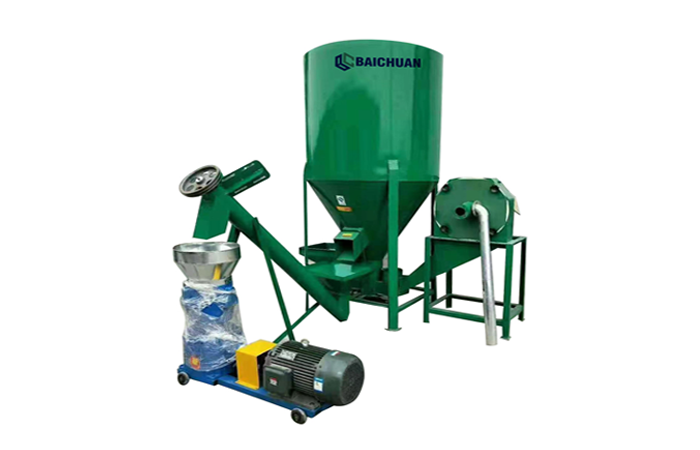
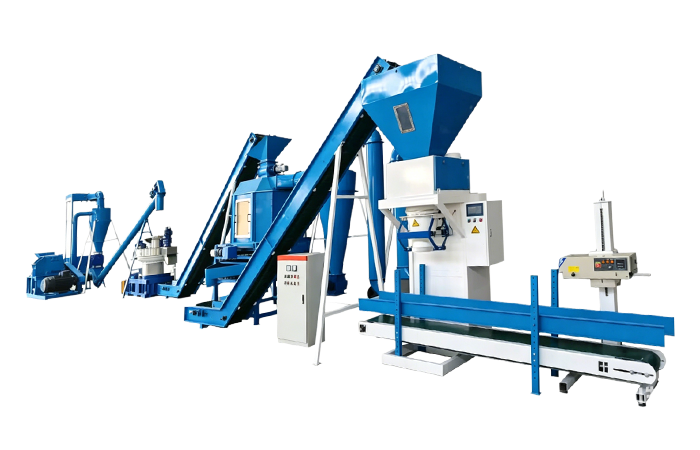
In modern, large-scale livestock farming, feed pellet production lines play a central and pivotal role. Through a scientific and seamless process, they transform a wide variety of raw materials—such as grains, soybean meal, minerals, and vitamin supplements—into nutritionally balanced, easily digestible and absorbable pellet feed. This represents not only a change in physical form but also a comprehensive improvement in nutritional value and feeding efficiency.
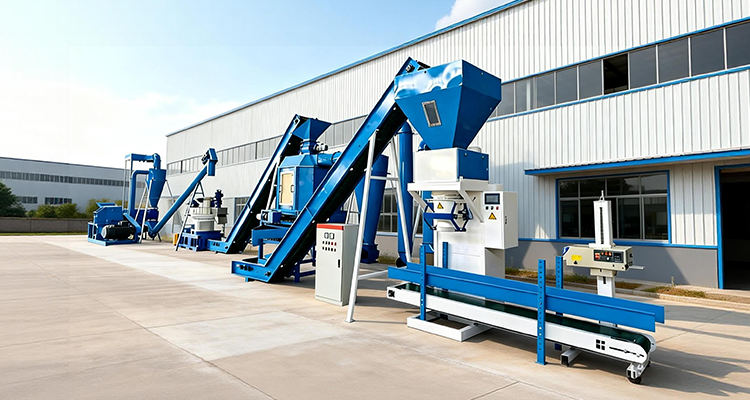
The entire production line typically consists of core stages such as raw material reception and cleaning, grinding, batching and mixing, pelletizing, cooling, and grading. Raw materials first undergo multiple rounds of screening and magnetic separation to remove impurities and metallic contaminants. Subsequently, precise grinding and mixing are performed according to the formula to ensure that every batch of feed has a uniform nutrient composition. The pelletizing stage is the crowning touch of the process; through the combined action of high temperature, high humidity, and mechanical pressure, the powdered material is compressed into compact, smooth pellets.
After pelletizing, the hot pellets must be cooled and dried in a cooler to ensure good storage stability and physical strength. A well-designed feed pellet production line can produce various types of pellets, including sinking and floating varieties, to meet the feeding habits of different aquatic, livestock, and poultry species. With its significant advantages of high efficiency, hygiene, and minimal waste, it provides a solid and reliable material foundation for the efficient operation of modern aquaculture and livestock farming, effectively driving the industry toward more specialized and intensive development.

Baichuan (Zhengzhou) Intelligent Equipment Manufacturing Co., Ltd.
Email:[email protected]