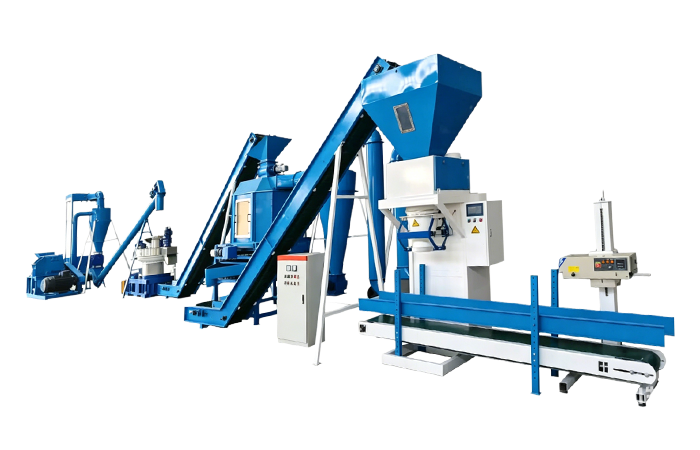
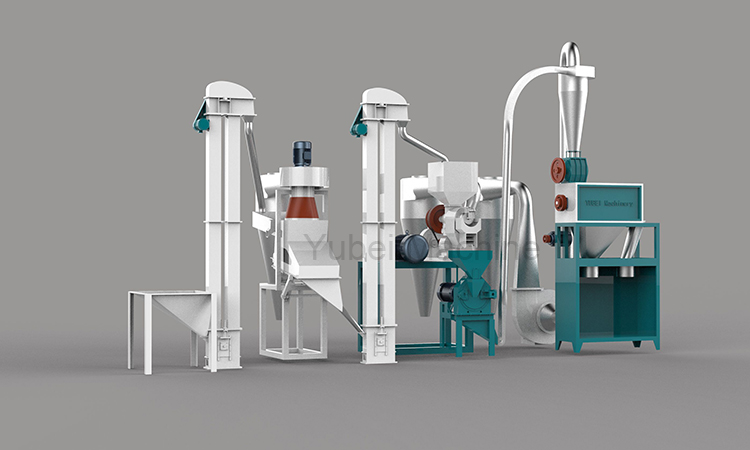
A corn milling line is a complete production system designed to process maize into finished products such as:
Corn flour
Corn meal
Corn grits
Degerminated maize products
Cleaning machine
Degerminator (peeling & germ removal)
Milling system (roller mills or hammer mills)
Sieving and grading system
Packing system
Key Advantage: One integrated solution from raw corn to finished product.
Other corn processing equipment usually refers to single-function machines, such as:
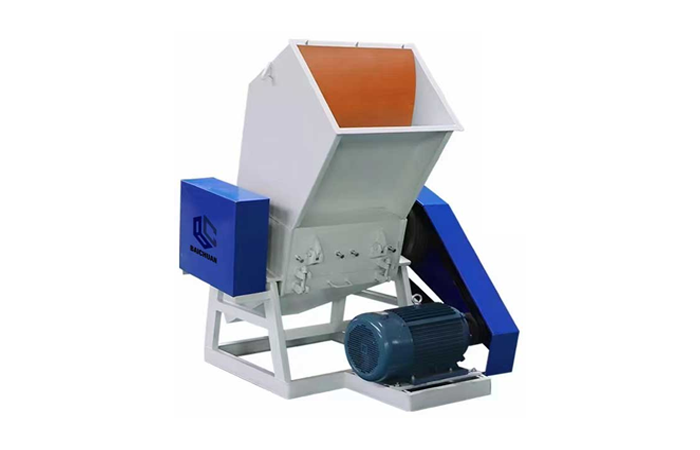
Corn crushers
Hammer mills
Corn grits machines
Corn shellers
Small maize flour machines
These machines focus on one processing step rather than the entire production process.
| Aspect | Corn Milling Line | Other Corn Processing Equipment |
|---|---|---|
| Processing Scope | Complete processing from cleaning to packaging | Single or limited processing function |
| Finished Products | Corn flour, meal, grits (food-grade) | Crushed corn or rough products |
| Automation Level | Semi-automatic or fully automatic | Mostly manual or semi-manual |
| Output Capacity | 10–300 tons per day | Usually under 10 tons per day |
| Product Consistency | Very stable | Inconsistent |
| Labor Requirement | Low | High |
| Food Safety Standard | High (food-grade design) | Limited |
| Investment Cost | Higher initial cost | Lower initial cost |
| Long-Term Profitability | High | Limited |
A corn milling line is ideal if you:
Want to start a commercial corn flour or corn meal factory
Need consistent product quality for supermarkets or wholesalers
Plan to export corn flour products
Require high output and automation
Want long-term profitability and scalability
This is why corn milling lines are widely used in Africa, South America, Southeast Asia, and the Middle East.
Other corn processing machines may be suitable if you:
Have a very small budget
Only need rough crushing for animal feed
Run a small family workshop
Do not require food-grade flour standards
However, upgrading later often costs more than investing in a proper milling line from the beginning.
Although a corn milling line requires a higher initial investment, it offers:
Higher product value
Lower labor cost
Better energy efficiency per ton
Stronger market competitiveness
In contrast, single machines may appear cheaper but often result in low margins and unstable quality, limiting business growth.
Many buyers compare a corn milling line with a corn crusher.
Key Difference:
A corn crusher only breaks corn into coarse particles.
A corn milling line produces fine, uniform, food-grade flour.
If your target market is human food consumption, a corn crusher alone is not sufficient.
Choose a corn milling line if your goal is:
Food-grade corn flour production
Medium to large-scale operation
Stable long-term business
Choose other corn processing equipment if:
You only need basic crushing
Your operation is small and local
A corn milling line is not just a machine—it is a complete production solution.
For businesses aiming at quality, efficiency, and scalability, it remains the most reliable choice in modern maize processing.
If you are unsure which configuration fits your needs, working with an experienced manufacturer who can provide customized corn milling solutions is strongly recommended.

Baichuan (Zhengzhou) Intelligent Equipment Manufacturing Co., Ltd.
Email:[email protected]